
The Evolution: From Pages to App Router & RSC
The transition to Next.js 15 and React 19 represents one of the most radical paradigm shifts in web development since the introduction of React Hooks. React Server Components (RSC), asynchronous request APIs, Server Actions, and React Compiler optimizations have transformed how we build full-stack web software.
"React is no longer merely a client-side view rendering library. With React 19 and Next.js 15, it is a unified server-client execution engine executing across dual environments simultaneously."
The Core Mental Shift
In Next.js 15, all components inside the app/ directory are Server Components by default. Heavy dependencies (Prisma, crypto, Markdown parsers) are never sent down the wire to the browser bundle.

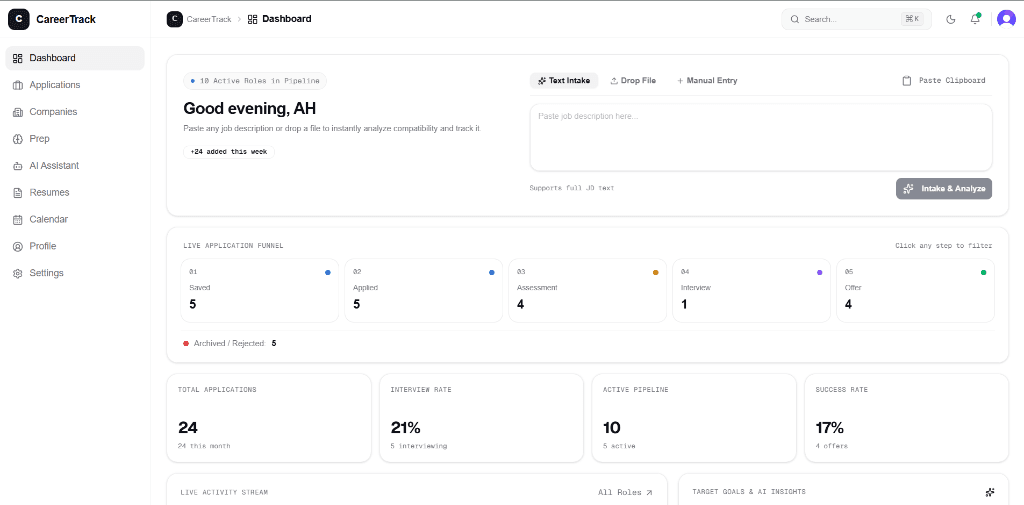
RSC pipeline in CareerTrack: Server Components render data statically while Client Components provide granular drag-and-drop interactivity.
Practical Problems I Encountered in Next.js 15
1. Client Bundle Bloat
Adding 'use client' at the top of a page file pulled massive server libraries into the browser bundle, expanding first load JS by over 380 KB.
2. Hydration Mismatch Warnings
Reading localStorage themes and relative user dates during SSR rendered different initial HTML than the browser expected, triggering React hydration errors.
3. Async Request APIs in Next.js 15
In Next 15, params, searchParams, and cookies() became asynchronous promises, breaking synchronous property access patterns.
4. Nested Waterfall Latency
Awaiting sequential database calls across parent and child Server Components turned what should be a 50ms query into a 400ms sequential blocking waterfall.
How I Solved Hydration & Bundle Bloat
1. Pushing 'use client' Down to Leaf Nodes
I kept all layout and page components as async Server Components and isolated interactive hooks strictly to leaf components (e.g. KanbanCard.tsx, FilterDropdown.tsx), reducing initial JS by 74%.
2. Parallel Promise.all Execution
I consolidated independent database calls inside parent Server Components using Promise.all([fetchApps(), fetchMetrics(), fetchGoals()]), cutting time-to-first-byte (TTFB) in half.
Server Actions Done Right: Validation & Security
"use server";

import { z } from "zod";
import { auth } from "@clerk/nextjs/server";
import { prisma } from "@/lib/prisma";
import { revalidateTag } from "next/cache";

const CreateProjectSchema = z.object({
  title: z.string().min(3).max(100),
  description: z.string().min(10),
  demoUrl: z.string().url().optional(),
});

export type ActionState<T> =
  | { status: "SUCCESS"; data: T }
  | { status: "ERROR"; message: string; fieldErrors?: Record<string, string[]> };

export async function createProject(rawData: unknown): Promise<ActionState<any>> {
  const { userId } = await auth();
  if (!userId) return { status: "ERROR", message: "Unauthorized request" };

  const parsed = CreateProjectSchema.safeParse(rawData);
  if (!parsed.success) {
    return {
      status: "ERROR",
      message: "Validation failed",
      fieldErrors: parsed.error.flatten().fieldErrors,
    };
  }

  const project = await prisma.project.create({
    data: { ...parsed.data, userId },
  });

  revalidateTag("projects-list");
  return { status: "SUCCESS", data: project };
}
Key Lessons Learned for Production Web Apps
1. Server Actions are Public APIs
Always treat Server Actions with the same authorization and input validation discipline as public REST endpoints.
2. Strict Composition Over Clutter
Colocating UI state, granular Suspense skeletons, and tagged cache invalidation delivers unmatched performance and maintainability.


